





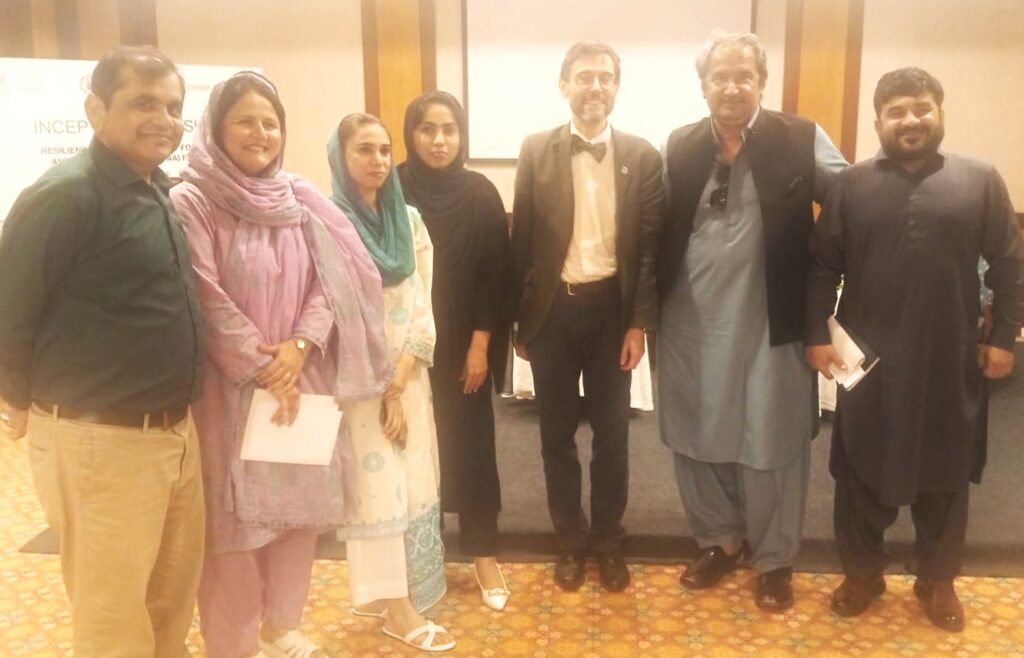
By our correspondent
KARACHI: A capacity-building workshop titled “Resilience & Adaptation by Fostering Anticipatory Action (RAFAA)” was held at a local hotel in Karachi on Tuesday, bringing together development practitioners, government representatives and technical experts to discuss ways of strengthening climate preparedness in the agriculture sector.
The event was organized by the Food and Agriculture Organization (FAO) in collaboration with CESVI, as part of ongoing efforts to support vulnerable farming communities in disaster-prone regions of Sindh.
Speaking at the opening session, CESVI Country Director Farhan Khan outlined the broader objectives of the RAFAA project, explaining its focus on enhancing resilience among smallholder farmers who remain disproportionately exposed to climate shocks such as floods, droughts and erratic rainfall patterns.
Project Manager at FAO, Pedro A. Gariton Delvaux, described the initiative as a multidimensional intervention designed to protect standing crops from climate-induced disasters while also safeguarding small farmers from the risk of food insecurity.
He noted that the project would initially be implemented in Sindh’s Mirpurkhas and Umerkot districts, areas frequently affected by climatic stress and agricultural vulnerability, before potentially being expanded to other regions depending on outcomes and resources.
Participants at the workshop underscored the growing importance of crop insurance as a critical safety net for farmers whose livelihoods are increasingly threatened by climate-related disruptions.
Representatives from the Pakistan Agricultural Research Council (PARC), Sindh Irrigation and Drainage Authority (SIDA), Sindh Technical and Vocational Training Authority (STVETA), Pakistan Council of Research in Water Resources (PCRWR), and the Agriculture Extension Department attended the workshop, reflecting a broad-based institutional engagement on climate resilience and anticipatory action in the agricultural sector.
