





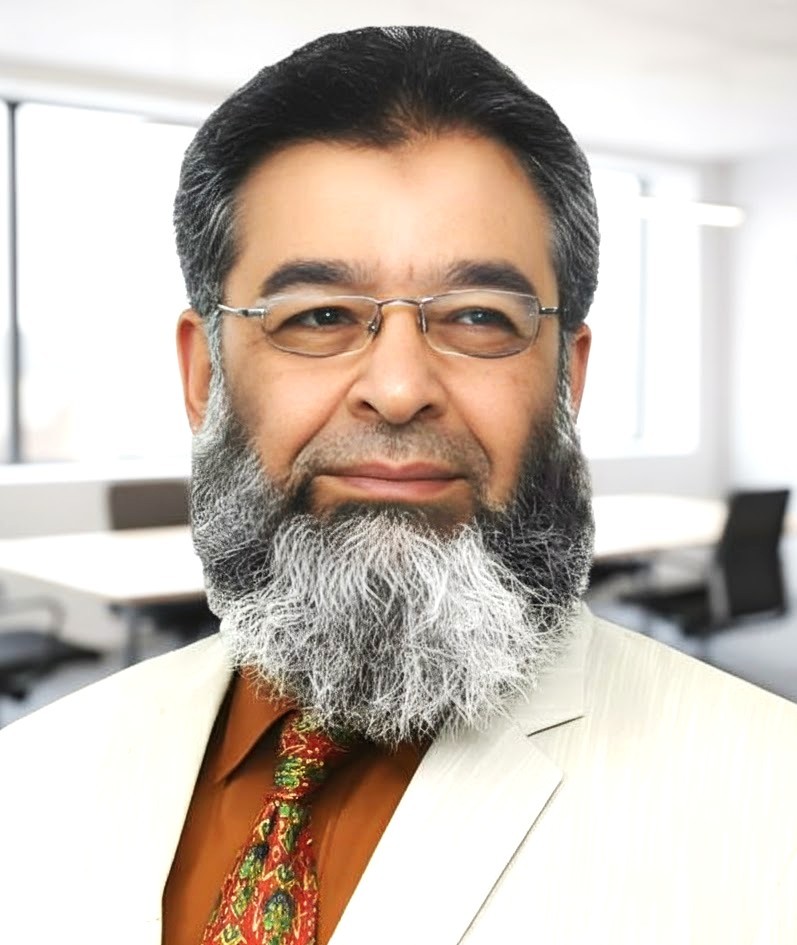
By Muhammad Mohsin Iqbal
In Pakistan’s long and uneven struggle with insecurity, there has always been a decisive factor that outlives weapons, strategies, and shifting political moments. It is public consciousness. Whenever fear has been met with clarity and division has been replaced with shared purpose, the state has found space to recover and respond. When that unity weakens, the challenge grows sharper. This pattern, repeated across decades, now appears again in a more visible form, as citizens, particularly in Khyber Pakhtunkhwa, show a renewed determination to reject violence and those who sustain it.
The country’s security history is often told through battles and operations, but beneath that surface lies another story, one of social resilience. From the early conflicts after independence to the prolonged waves of militancy in the north-west, Pakistan’s experience has shown that no institutional response can succeed in isolation. Military action, law enforcement operations, and intelligence work may disrupt networks, but lasting stability depends on whether ordinary people see violence for what it is and refuse to absorb its logic into daily life. That shift in perception is slow, but when it arrives, it reshapes everything.
In recent years, this shift has become more noticeable. Communities that once lived under the shadow of attacks have begun to speak in a clearer and more unified voice against militancy. In towns along Kohat Road, in parts of Bara and the wider Khyber region, and across urban centres like Peshawar, public expression has taken an unusual but telling form. Walls carry messages of rejection, not in the language of politics or policy, but in direct and emotional terms that reflect lived experience. These are not orchestrated campaigns in any formal sense. They are the markings of communities that have endured loss and reached a point of collective refusal.
At the centre of this sentiment is a growing recognition that militant violence is not an abstract threat. It is personal. It has taken the lives of civilians, teachers, police officers, soldiers, religious scholars and children. The scale of suffering, measured in tens of thousands over many years, has created a memory that is difficult to erase. In such a context, ideological justifications for violence lose their appeal. Groups that once tried to present themselves as defenders of faith or identity are increasingly viewed through the lens of harm they have caused rather than the narratives they attempt to project.
This change in perception has also altered the space in which extremist messaging once operated. Where ambiguity once existed, there is now a sharper public response. Many citizens describe militant violence as a distortion of religious and moral principles, not an extension of them. Religious references are frequently used in public discourse to reinforce the idea that harm to civilians and the destabilisation of society cannot be justified. The emphasis is less on abstract ideology and more on the lived consequences of violence, which have touched nearly every segment of society.
Khyber Pakhtunkhwa has been central to this evolution. The province has experienced some of the most intense phases of militancy and counter-militancy operations in the country. Entire communities have been displaced at different points, and the return to normal life has required years of effort. Yet it is precisely here that public rejection of violence has become more visible. The sentiment is not one of denial or distance, but of experience. Having lived through instability, people are now more willing to articulate a desire for permanence and peace, even if imperfect, rather than cycles of conflict.
This does not mean that challenges have disappeared. Security threats remain complex and adaptive, often shifting across borders and exploiting political or social vulnerabilities. Analysts frequently point to the regional dimensions of militancy, including sanctuaries, facilitation networks, and ideological currents that do not respect national boundaries. These realities complicate any simple narrative of cause and effect. They also reinforce the need for sustained coordination between state institutions and communities, rather than reliance on one side alone.
Yet what has changed is the relationship between the public and the problem itself. Where there may once have been hesitation, there is now greater clarity. Citizens increasingly view extremist violence not as a distant security issue but as a direct assault on their collective future. This shift matters because countering militancy is not only a matter of enforcement. It is also a matter of legitimacy, narrative, and social rejection. When communities refuse to provide space, whether physical or ideological, the operational environment for violent groups narrows significantly.
The role of religion in this discourse also remains significant, though often interpreted through a lens of restraint and protection rather than confrontation. Many voices within society emphasise that faith, in its essence, calls for the safeguarding of life and the prevention of harm. This moral framing helps anchor opposition to violence in familiar ethical language, making it harder for extremist narratives to gain traction among younger or more vulnerable audiences.
Still, the responsibility of sustaining this shift does not rest on communities alone. Educational institutions, media platforms, political leadership and religious scholars all play a role in shaping how violence is understood and challenged. Fragmented messaging or inconsistent narratives risk weakening the progress that has been made. A unified approach, grounded in clarity rather than ambiguity, is essential if the current momentum is to be maintained.
What is unfolding now is not a sudden transformation but a gradual consolidation of awareness into action. Societies do not change overnight, especially after prolonged exposure to violence. But they do change when experience accumulates, when memory becomes shared, and when silence gives way to voice. Pakistan appears to be moving through such a moment, where awareness of the cost of conflict is turning into a more explicit rejection of it.
The road ahead remains uncertain, as it always does in regions shaped by long-standing insecurity. Yet there is a discernible shift in tone. It is visible in public spaces, in community conversations, and in the way people speak about their own security. If sustained, this change may prove as important as any military or political development. For in the end, the most durable form of security is not only enforced from above but affirmed from within.
(The writer is a parliamentary expert with decades of experience in legislative research and media affairs, leading policy support initiatives for lawmakers on complex national and international issues, and can be reached at editorial@metro-Morning.com)
