





By our correspondent
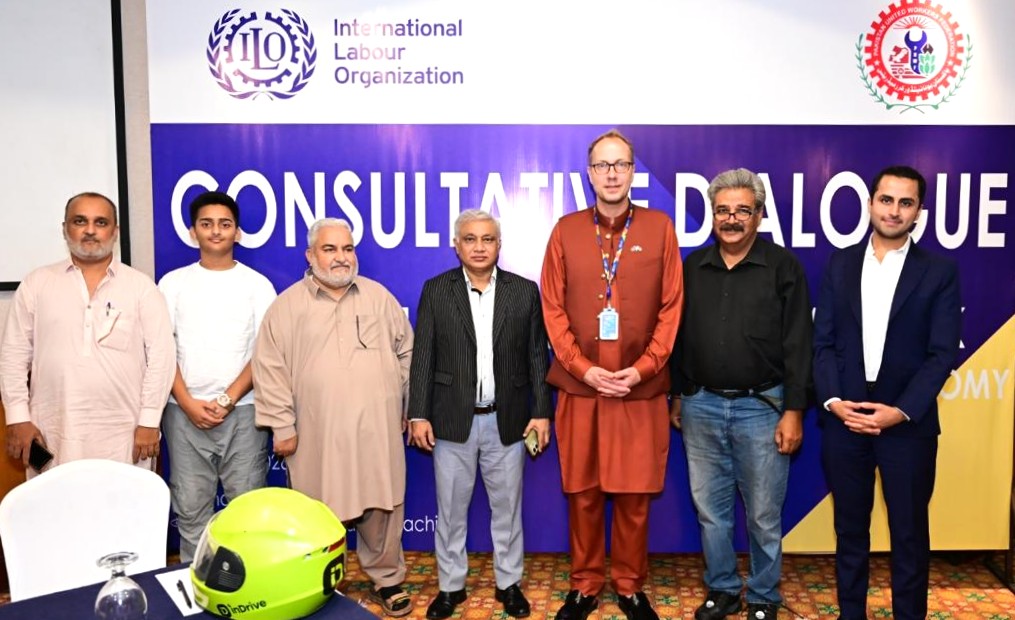
KARACHI: A consultative meeting on platform economy workers, jointly organised by the International Labour Organization and the Pakistan United Workers Federation (PUWF), was held, in which stakeholders discussed the evolving nature of digital labour and the urgent need for stronger social protection frameworks in Pakistan’s rapidly expanding gig economy.
The session opened with remarks from Geir T Tonstol, Country Director of the International Labour Organization, who underscored the growing significance of platform-based work in urban economies and the policy challenges it posed for labour regulation, social security coverage and workers’ rights.
He emphasised that the rise of app-based employment had created new opportunities but had also exposed structural gaps in protection that required coordinated institutional responses. A detailed overview of trade union history in Pakistan was presented by Waqar Ahmed Memon, who highlighted the long-standing role of the Pakistan United Workers Federation in organising labour since 1947.
Wasim Jamal, Director of the Sindh Employees’ Social Security Institution (SESSI), outlined the benefits available to platform workers under registration schemes. He explained that formal registration as self-employed workers under Sindh’s social security framework could help extend access to healthcare and other essential protections, particularly for those engaged in app-based delivery and transport services.
The session also included a presentation by Saad Muhammad on the International Labour Organization’s Fundamental Principles and Rights at Work. He outlined key conventions relating to freedom of association, elimination of forced labour, and non-discrimination, linking them to the realities faced by platform workers in Pakistan.
Participants then broke into group discussions where platform workers shared experiences, highlighting irregular incomes, lack of insurance coverage, algorithmic control, and weak dispute resolution mechanisms. Group leaders later presented their findings, reflecting a shared demand for clearer regulatory safeguards and formal recognition.
The meeting concluded with agreement on a preliminary work plan for 2026, led by the Pakistan United Workers Federation, focusing on strengthening advocacy, expanding registration drives, and improving coordination with state institutions to advance protections for platform economy workers.
