





By Imtiaz Hussain
SUKKUR: The 4th International Multidisciplinary Conference on Engineering and Emerging Technologies (IMCEET 2026) has commenced at Benazir Bhutto Shaheed University of Technology and Skill Development Khairpur, bringing together academics, researchers, policymakers and industry experts to discuss advances in engineering, artificial intelligence and innovation.
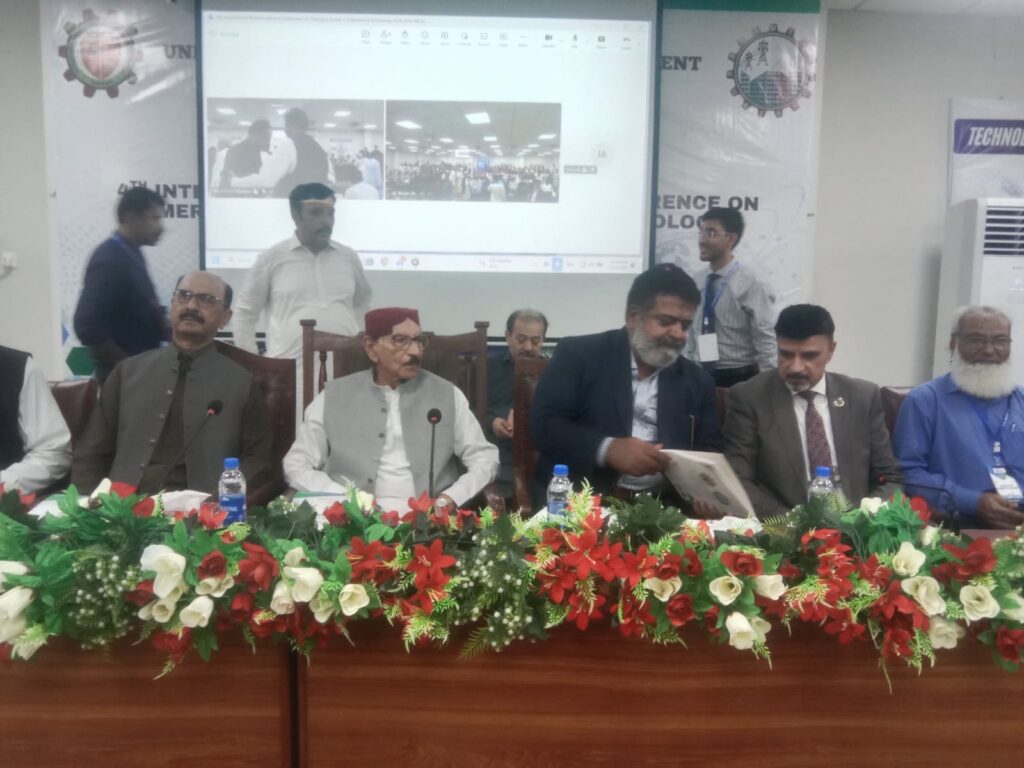
The conference is being held under the patronage of Vice Chancellor Professor Dr Rasool Bux Mahar and Patron Professor Dr Manthar Ali Keerio, while Dr Muhammad Saleem Memon, Chairman of the Department of Electronics Engineering, is serving as conference chair.
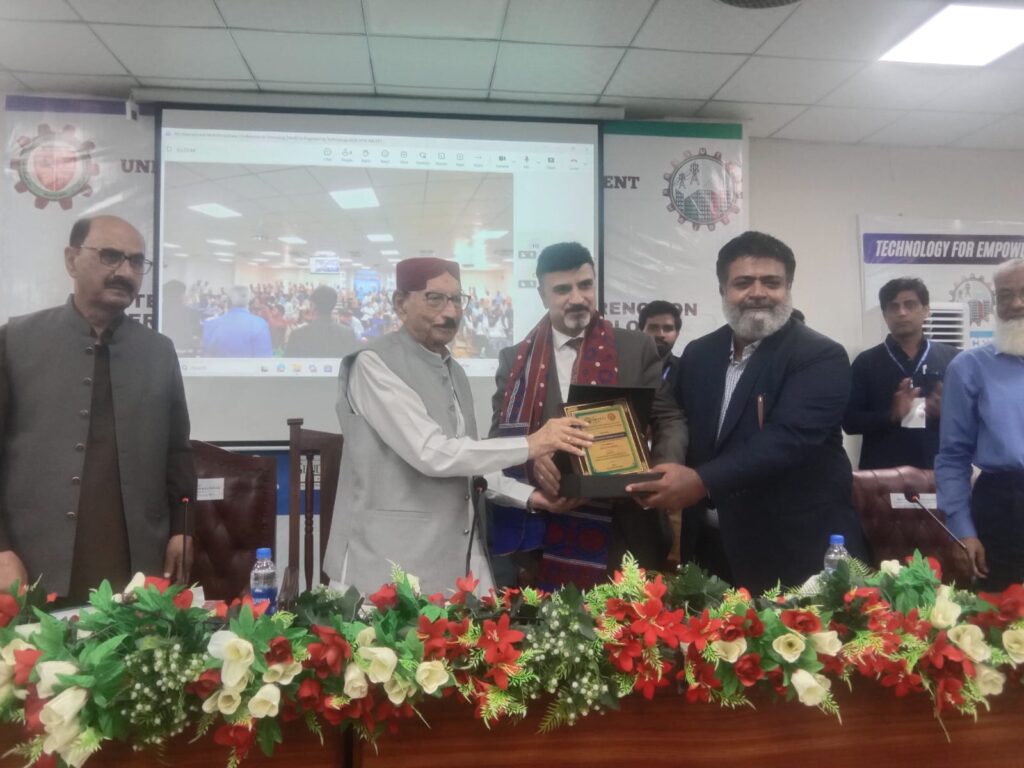
Speaking at the opening session, former Chief Minister of Sindh Syed Qaim Ali Shah praised the university’s efforts in promoting research, innovation and academic excellence in the region. He recalled that the project for a skill development university in Khairpur was approved during his tenure.
He said that when he had proposed establishing a technical university, the then leadership questioned its feasibility, but he insisted it must be created to produce technologists. He also referred to past debates on energy policy, including Thar coal development, saying it had now gained international recognition as a major source of electricity generation.
Qaim Ali Shah also made political remarks about regional and international developments, including Pakistan’s diplomatic positioning during tensions with India, and credited political leadership for engaging in international diplomacy. He further mentioned a recent meeting with Prime Minister Shehbaz Sharif in Islamabad, where infrastructure and transport projects were discussed.
The conference included participation from vice chancellors of several universities, including Prof Dr Naik Muhammad Shaikh, Prof Dr Naveed Ahmed Shaikh and Prof Dr Muhammad Yousif Khushk, along with national and international academics and researchers.
Speakers highlighted the importance of linking academia with industry, promoting digital transformation, artificial intelligence, sustainable engineering and collaborative research to address global and national challenges.
Vice Chancellor Dr Rasool Bux Mahar said the conference was serving as a key academic platform where researchers, students and professionals were presenting work and discussing future opportunities in engineering and technology fields.
Former provincial adviser Syed Asad Ali Shah Jillani stressed the need for a stronger connection between technology and academia, urging the development of skilled technologists. He said Pakistan faced major challenges in energy, climate change, poverty, urbanisation, health, education and governance, and called for sustainable AI-driven transformation.
He added that researchers and technologists should focus on solving real-world problems rather than pursuing academic qualifications alone, and said Pakistan needed AI-enabled institutions to meet future demands.
