





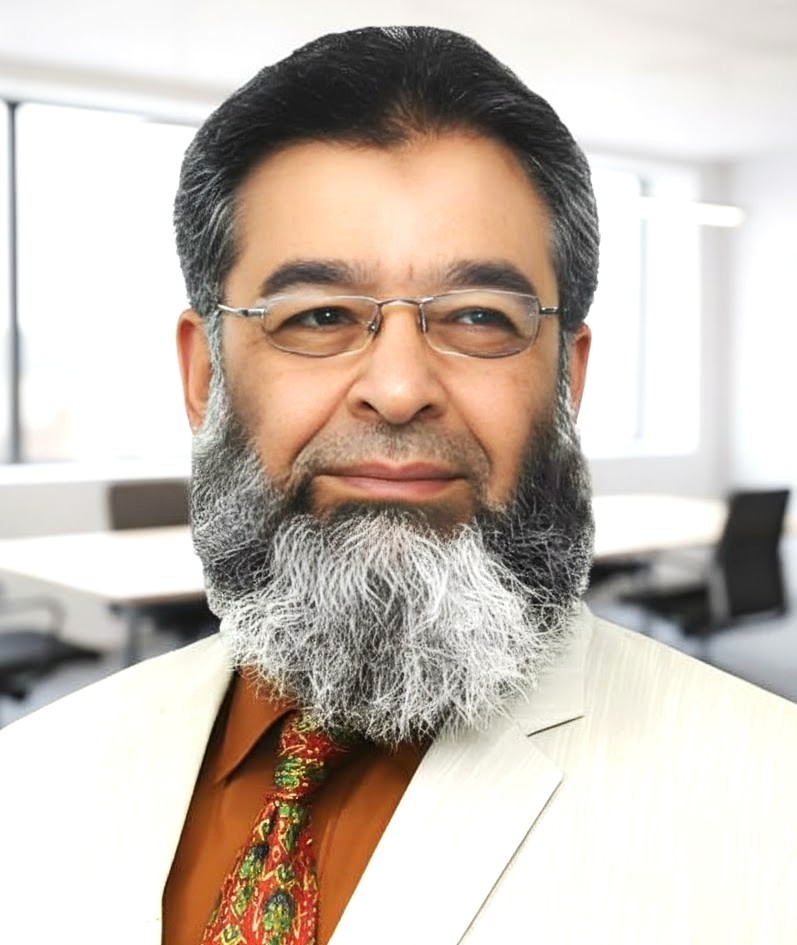
By Muhammad Mohsin Iqbal
The progress of nations is seldom measured merely by the laws they enact or the institutions they build. It is instead revealed in the quality of leadership that shapes those institutions and in the capacity of the state to adapt itself to changing historical demands. Institutions, no matter how formally well designed, remain inert without individuals who can interpret their purpose with wisdom, restraint, and imagination. History consistently shows that leadership is not defined by authority alone but by the manner in which authority is exercised: with tolerance, foresight, and an unwavering sense of responsibility to the public good. These qualities are not incidental; they are cultivated through experience, tested under pressure, and sustained through discipline.
In contemporary Pakistan’s parliamentary landscape, Sardar Ayaz Sadiq, a thrice-elected Speaker of the National Assembly, is widely seen as one such figure whose career reflects these enduring attributes. The essence of effective parliamentary leadership lies in the ability to balance competing political forces while preserving institutional dignity. Throughout his tenure, Sardar Ayaz Sadiq has sought to position the National Assembly not merely as a forum of debate but as a functioning institution of governance that evolves with time. His approach has combined procedural discipline with an emphasis on consensus-building, ensuring that parliamentary continuity is maintained even during periods of heightened political tension.
Rather than treating the speakership as a passive constitutional office, his tenure has reflected an active engagement with institutional reform and administrative renewal. A defining feature of his stewardship has been the introduction of a structured programme of fiscal discipline and administrative right-sizing within the National Assembly Secretariat. At a time when public finances face persistent strain and governments across the world are under pressure to demonstrate efficiency, these reforms have positioned the Secretariat as a relatively disciplined public institution. Through a combination of austerity measures, procurement rationalisation, and improved financial monitoring, the Secretariat is projected to generate savings of approximately Rs. 4.5 billion during the 2025–26 financial year.
This represents a significant share of its overall expenditure and signals a shift towards more sustainable institutional budgeting practices. What distinguishes this achievement is not merely the scale of savings but the method through which they were achieved. The reduction in sanctioned posts, from 1,725 to 1,344, was carried out without dismissals or forced redundancies. In a public sector environment where restructuring is often associated with social and administrative disruption, this approach reflects a deliberate effort to align efficiency with dignity of service. It demonstrates an understanding that institutional reform must also account for human consequence, and that public employees remain central to the functioning of parliamentary systems.
Alongside workforce restructuring, attention was also directed towards reducing non-salary expenditure through improved oversight mechanisms. Energy conservation measures, tighter procurement controls, and better financial discipline contributed to a culture of accountability that is often difficult to institutionalise in bureaucratic settings. These reforms, while technical in nature, carry broader significance: they indicate a shift towards governance models that prioritise transparency and long-term sustainability over short-term administrative convenience.
Perhaps the most visible transformation under this agenda has been the gradual move towards a paperless parliamentary system. For decades, parliamentary processes were heavily dependent on physical documentation, creating inefficiencies in both time and cost. The digitisation of parliamentary records and workflows has altered this landscape significantly. Electronic circulation of documents has reduced administrative delays, lowered printing costs, and introduced a more streamlined method of legislative coordination. Beyond efficiency, this shift also reflects an increasing awareness of environmental considerations in public administration.
This digital transition reached a new milestone with the introduction of Pakistan’s first artificial intelligence-enabled parliamentary system. The integration of AI into legislative processes marks a structural shift in how parliamentary work is conducted, particularly in areas such as research support, document retrieval, and administrative coordination. While still in its early phase, the system signals an institutional willingness to engage with emerging technologies in order to enhance legislative capacity and procedural efficiency.
A key feature of this technological shift is the emphasis on data sovereignty and security. The system has been developed as a fully secure, on-premises platform, ensuring that parliamentary data remains under national control. In an era where digital vulnerabilities and cyber risks are increasingly central to governance debates, this decision reflects a careful balancing of innovation with institutional caution. It underscores an understanding that technological adoption must be accompanied by safeguards that protect democratic infrastructure.
Sardar Ayaz Sadiq’s parliamentary legacy gains additional significance from his position as one of the longest-serving Speakers in Pakistan’s history. Having been elected to the office on three separate occasions, his tenure reflects continuity in a political environment often characterised by discontinuity. Yet longevity in office is not, in itself, indicative of impact. What matters more is the extent to which institutional practices are strengthened and preserved beyond individual tenures.
(The writer is a parliamentary expert with decades of experience in legislative research and media affairs, leading policy support initiatives for lawmakers on complex national and international issues, and can be reached at editorial@metro-Morning.com)
