





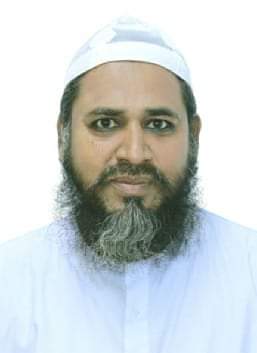
By Dr. Mehmood Alam Aasi Khurram Jahangiri
The enduring legacy of the righteous has never merely rested in books, shrines or inherited titles. It survives in manners, in conduct, in the quiet discipline of reverence and humility that one generation passes to another. The Qur’anic reminder in Surah Al-Kahf that “wealth and children are the adornment of worldly life, but lasting good deeds are better with your Lord” speaks not only of personal virtue but of the moral inheritance that outlives power, fame and material achievement. In an age increasingly defined by spectacle, noise and instant recognition, the life of Hazrat Sayyiduna Qutb-e-Madina Ziauddin Madani stands as a reminder of a gentler, deeper Islamic tradition rooted in adab, service and spiritual sincerity.
Born in 1877 in Klasswala near Sialkot, Hazrat Ziauddin Madani belonged to a distinguished spiritual lineage tracing back to Hazrat Abu Bakr Siddique (RA). Yet what distinguished him was not ancestry alone, but the way he transformed inherited honour into lived character. Across the subcontinent and later in the holy cities of Islam, he became associated with scholarship, humility and unwavering devotion to the Prophet Muhammad (PBUH). His life reflected a form of spirituality that saw etiquette not as outward performance, but as the natural expression of love.
Modern religious discourse often speaks loudly about identity, doctrine and authority, yet far less about refinement of character. The elders of the Islamic tradition understood something many contemporary societies appear to have forgotten: civilisation begins with manners. Reverence, restraint, humility in speech and respect in conduct were once regarded as the foundation of faith itself. Hazrat Ali (RA) famously said that religion in its entirety is adab. This understanding shaped generations of scholars and spiritual teachers who measured greatness not through visibility, but through self-discipline.
That culture of spiritual etiquette can still occasionally be witnessed in those shaped by such traditions. Encounters with the descendants and disciples of Hazrat Ziauddin Madani reveal how deeply these values continue to resonate. Despite academic distinction and professional success, figures such as Dr Rizwan Madani carry themselves with a humility and grace more associated with older scholarly traditions than with modern prestige. Their conduct reflects the spiritual training of predecessors who believed that knowledge without humility was spiritually incomplete.
This tradition of adab extended beyond personal manners into love for sacred spaces and sacred memory. Stories associated with Hazrat Ziauddin Madani reveal a profound reverence for the holy cities that bordered on total devotion. It is said that even ordinary references to places such as Makkah or Madinah were, for him, incomplete without the respectful addition of “Sharif” or “Munawwarah”. To modern ears this may sound symbolic, even excessive, yet within classical Islamic spirituality language itself was treated as an ethical responsibility. The way one spoke reflected the state of one’s heart.
Such devotion was not isolated sentimentality. It inspired public service, charitable work and intellectual contribution. During a period when the Arabian Peninsula remained economically deprived and far removed from the oil wealth that would later transform the region, Muslim philanthropists and scholars from the subcontinent invested heavily in welfare and education around the holy cities. Hazrat Ziauddin Madani played a significant role in such humanitarian efforts, including support for orphan welfare in Madinah. This reflected a generation whose attachment to faith translated naturally into service for humanity.
There is an uncomfortable contrast between that era and the condition of much of the contemporary Muslim world today. Across both Arab and non-Arab societies, political instability, economic hardship and sectarian fragmentation continue to deepen. Religious rhetoric is abundant, yet genuine moral leadership often feels absent. The lives of figures such as Hazrat Ziauddin Madani remind Muslim societies that spiritual authority was once inseparable from compassion, simplicity and public welfare. The true scholar was not merely a preacher, but someone who carried the burdens of the community with dignity.
Even his final years reflected this profound attachment to Madinah. When severe illness affected his eyesight and doctors urged him to seek treatment elsewhere, he reportedly refused to leave the city of the Prophet (PBUH). The decision reflected not stubbornness, but a spiritual worldview in which physical hardship seemed insignificant beside the emotional comfort of remaining near the beloved city. It echoed the devotion historically associated with Imam Malik, who regarded Madinah with such reverence that he hesitated even to raise his voice within it.
Hazrat Ziauddin Madani also left behind an intellectual and spiritual legacy whose influence continues to shape contemporary Islamic movements. Among those spiritually connected to him was the founder of Dawat-e-Islami, a movement that would later grow into one of the most influential transnational Sunni organisations in the Muslim world. Yet perhaps his greatest legacy lies less in institutions and more in the moral atmosphere he represented: a world where scholarship was accompanied by gentleness, where devotion softened rather than hardened the heart, and where reverence for faith produced humility rather than arrogance.
At a time when public discourse has become increasingly coarse and impatient, the memory of such individuals carries renewed importance. Their lives challenge a culture obsessed with speed, recognition and self-promotion. They remind believers that true spirituality is not loud. It is reflected in posture, in speech, in service, and in the ability to preserve dignity even in ordinary moments. The righteous endure not because history preserves their names, but because their character leaves traces in the hearts of others. Those traces, however faint, remain among the most valuable inheritances any society can protect.
(The writer is a religious scholar, poet and writer, has done PhD, can be reached at news@metro-morning.com)
