





By Moin Ullah Shah
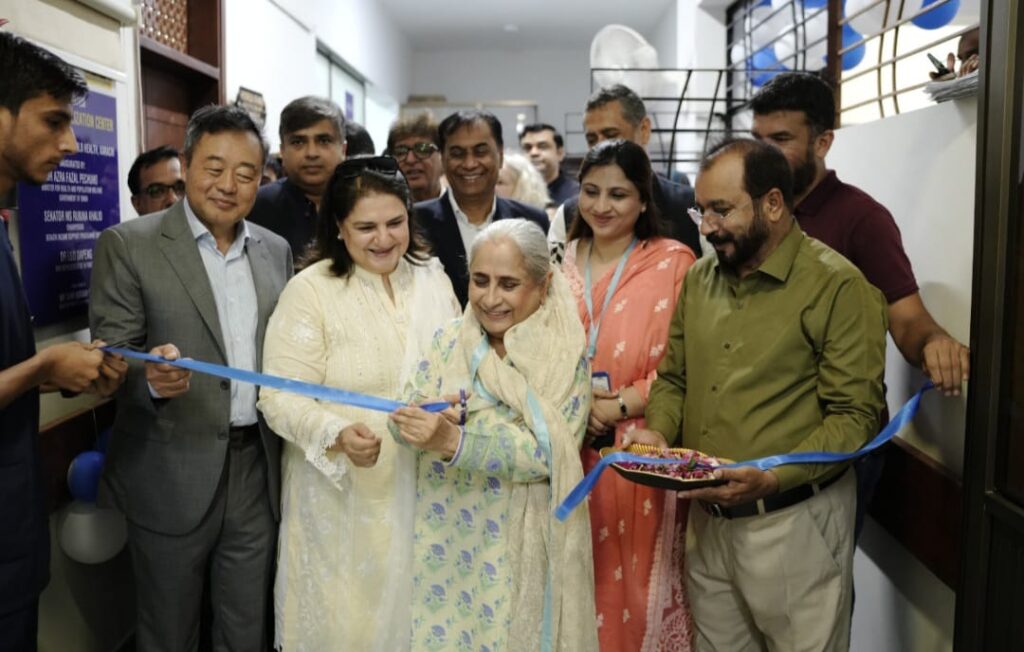
KARACHI: The chairperson of the Benazir Income Support Programme, Senator Rubina Khalid, along with Sindh Health Minister Dr Azra Fazal Pechuho, inaugurated a Nutrition Stabilisation Centre and a Model Expanded Programme on Immunisation centre at the National Institute of Child Health in Karachi on Monday. The facilities have been established under the Benazir Nashonuma Programme and are intended to strengthen child health services and improve the treatment of malnutrition cases.
The ceremony was attended by health officials and representatives of international health organisations, reflecting what officials described as a broader effort to coordinate between government institutions and development partners in addressing child health challenges in Sindh and across Pakistan.
Speaking at the event, Senator Rubina Khalid said the Nutrition Stabilisation Centre formed an important part of the Benazir Nashonuma Programme. She said it had been designed to provide specialised care and treatment for children suffering from moderate and severe acute malnutrition. She added that a structured referral system had been developed to link Nashonuma facilitation centres with stabilisation units, ensuring that children were identified early, referred promptly and treated without delay.
She said the initiative reflected a collective commitment by the federal and provincial governments along with international partners to tackle malnutrition in a more coordinated and effective manner. She emphasised that progress in child health could only be achieved when health systems, government departments and United Nations agencies worked together under a shared framework.
Sindh Health Minister Dr Azra Fazal Pechuho highlighted the growing burden of child malnutrition in Pakistan and said urgent and integrated measures were needed to improve health outcomes for vulnerable groups. She said a significant number of children continued to suffer from stunting and impaired cognitive development as a result of poor nutrition, calling it a long standing public health challenge.
She noted that the Benazir Nashonuma Programme had shown encouraging results, with official data indicating that more than ninety per cent of beneficiaries had completed immunisation coverage. She said this demonstrated the effectiveness of combining nutrition support with preventive healthcare services under a single delivery model.
Dr Pechuho added that the Model EPI Centre established at the National Institute of Child Health would serve as a benchmark for child healthcare services. She said it was expected to provide a replicable approach for strengthening immunisation and preventive health systems across the province.
Officials at the ceremony said the new centres were aimed at improving early diagnosis, treatment and follow up care for children affected by malnutrition while also strengthening routine immunisation coverage. The initiative was described as part of a wider effort to improve maternal and child health indicators in Sindh through better coordination and service delivery.
