





Uzbekistan expands regional trade routes as Tashkent begins moving machinery and industrial supplies through the Pakistan-Iran border corridor
By S.M. Inam
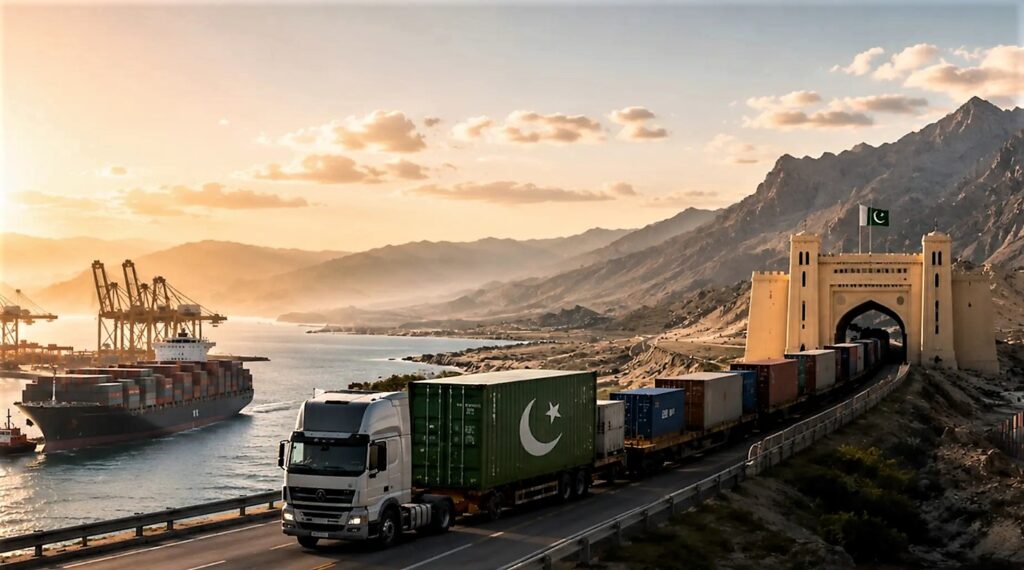
ISLAMABAD: Pakistan has moved to strengthen its position as a regional trade and transit hub by developing new transport corridors aimed at connecting landlocked Central Asian countries with the country’s strategic ports of Gwadar and Karachi.
The move has gained momentum as Uzbekistan has started using alternative trade routes to reach Pakistani ports while avoiding traditional pathways through Afghanistan, according to a report by Azerbaijani media outlet The Caspian Post.
The report said Tashkent had begun transporting agricultural machinery and industrial raw materials through the Gabad-Rimdan border crossing along the Pakistan-Iran frontier. The route has opened a new option for Central Asian traders seeking access to international markets through Pakistan’s maritime infrastructure.
The newly developed corridors, which were launched in April 2026, have provided Central Asian states with another channel for trade and connectivity. The development was seen as part of Pakistan’s wider efforts to expand its role as a bridge between resource-rich Central Asia and global markets.
The report said Pakistan introduced these alternative routes after the closure of the Torkham and Chaman border crossings in October 2025 due to security concerns. The restrictions affected traditional trade movements between Pakistan and Afghanistan, prompting authorities and businesses to explore other options.
More than 14,000 metric tons of cargo have already been transported through the emerging route, highlighting increasing interest among regional traders in using Pakistan as a transit destination.
Economic analysts said the expansion of these corridors could bring new opportunities for Pakistan’s logistics sector. They said improved connectivity would support the growth of the Transport Internationaux Routiers (TIR) transit system, which allows smoother cross-border movement of goods, and strengthen the country’s single-window customs platform aimed at reducing delays in trade procedures.
Experts also said the development could increase the importance of Gwadar Port under the second phase of the China-Pakistan Economic Corridor (CPEC). The port is expected to play a larger role in connecting Central Asian economies with international shipping networks.
Pakistan has long sought to transform its geographic location into an economic advantage by becoming a gateway for neighboring regions. With Central Asian countries looking for reliable trade routes, officials and business leaders believe Pakistan’s ports and road networks could become increasingly important.
#Pakistan #Uzbekistan #CentralAsia #RegionalTrade #TradeCorridors #GwadarPort #KarachiPort #CPEC #TradeHub #TransitTrade #Logistics #TIR #SingleWindow #EconomicGrowth #Investment #Infrastructure #PakistanEconomy #InternationalTrade #SupplyChain #Connectivity #PakistanIran #CentralAsianMarkets #GlobalTrade #Business #CurrentAffairs #MetroMorning #WorldNews #BreakingNews #TradeRoutes #EconomicDevelopment
