





Insiders suggest a tentative power-sharing arrangement in which the chief minister’s office is expected to go to the PPP
By our correspondent
GILGIT: The Pakistan People’s Party (PPP) emerged as the single largest political force in the Gilgit-Baltistan Assembly elections, according to unofficial and preliminary results that indicated a fragmented mandate with no party securing an outright majority.
Early counts showed the PPP had secured 10 of the 24 contested seats, winning constituencies including GBA-1, GBA-4, GBA-5, GBA-7, GBA-9, GBA-10, GBA-11, GBA-12, GBA-17 and GBA-19. The result positioned the party at the head of the electoral field, though still short of the numbers required to form a government independently.
The Pakistan Muslim League-Nawaz (PML-N) secured four seats, including GBA-2, GBA-18, GBA-20 and GBA-22, while independent candidates performed strongly, winning seven constituencies such as GBA-3, GBA-6, GBA-15, GBA-16, GBA-21, GBA-23 and GBA-24. The Majlis Wahdat-e-Muslimeen (MWM) secured a single seat in GBA-8.
With no party crossing the simple majority threshold, political observers said the path was now open for coalition negotiations, with a PPP–PML-N arrangement emerging as the most likely outcome. Sources suggested that discussions were already being informally shaped along the lines of previous multi-party federal alliances, with the PPP potentially positioned to take the chief minister’s office, while the PML-N could be accommodated with the governorship. A possible 60-40 formula for the distribution of ministries was also being discussed among political stakeholders.
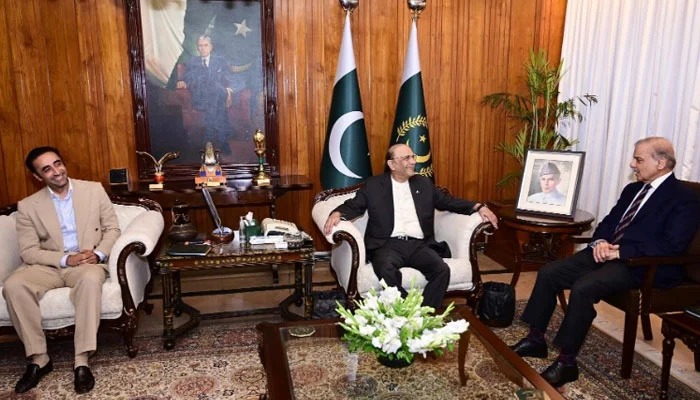
Prime Minister Shehbaz Sharif, in a statement, congratulated the people of Gilgit-Baltistan on what he described as the peaceful conduct of the elections. He also acknowledged the PPP’s position as the leading party, extending felicitations to President Asif Ali Zardari and PPP Chairman Bilawal Bhutto Zardari, while also praising PML-N candidates for what he termed a strong and competitive campaign. He further lauded the Election Commission for its role in conducting the polls, describing the process as largely transparent.
However, the election process was not without controversy. Several political parties, including PTI, PPP and JUI-F, raised concerns over alleged delays in result announcements, irregularities in Form-45 issuance, and questions surrounding the transparency of vote tabulation as unofficial results continued to emerge.
