





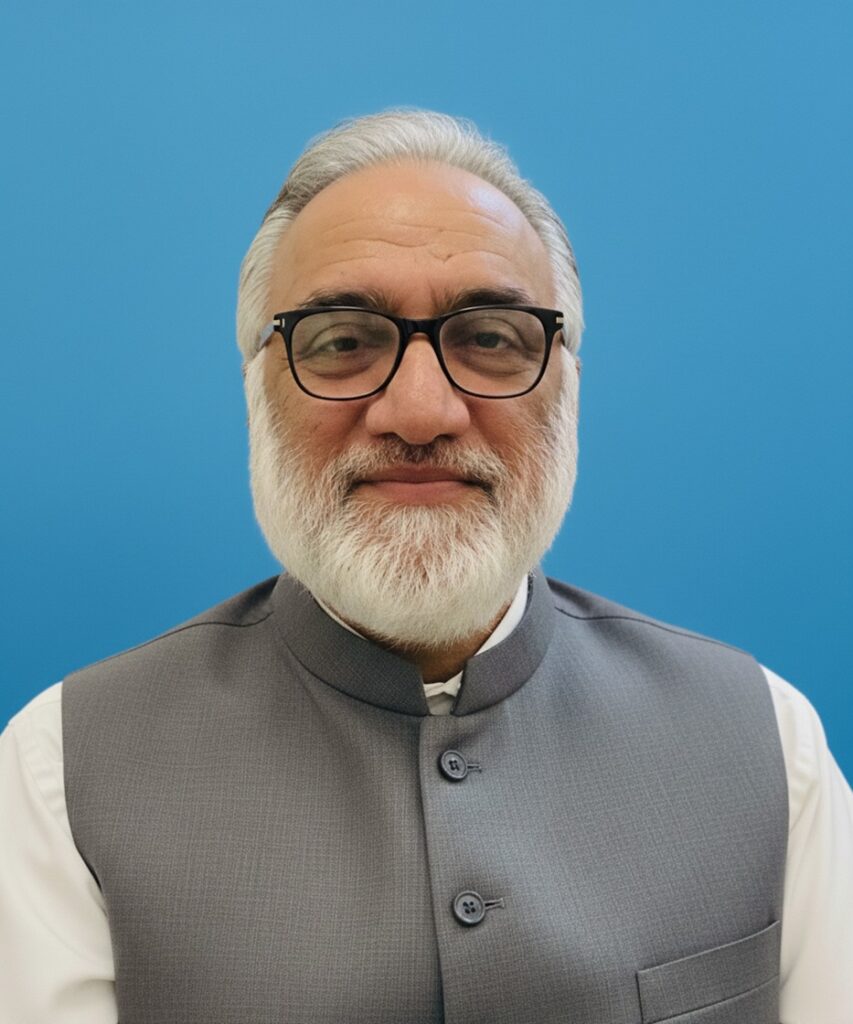
By Dr. Zafar Iqbal
In March 2026, the situation was such that a deep silence had enveloped the Muslim world. This silence was used to present the Abraham Accords — the central mantra of the joint US-Israeli campaign in the Middle East — as something sacred, concealing deeply questionable objectives behind a web of deception. By that point, the most brutal and savage massacre of Palestinians had already continued for two and a half years. At the time, we wrote a piece titled “The Abraham Accords and the Deafening Silence.” Today, that very phrase — “deafening silence” — has become a historic cry echoing through the Oval Office itself. The leaders of eight representative Islamic countries appeared to embody the proverb of watching the clock tick without even drawing breath.
Tongues capable of cutting sharper than scissors can, at times, fall into astonishing silence. Perhaps the OIC is mourning its own death, observing a ritual of fifteen seconds of silence, because even a full minute would prove too expensive. Who, after all, has that much time? This is the era of fast food — an age in which Palestine, swallowed gradually over a century, is now being consumed in the remaining moments. Now, as the Iran-US agreement moves closer to completion, President Trump sits in the Oval Office addressing countries directly concerned with the deal and, by extension, the Muslim world. Participating in the online conference are the leaders of Pakistan, Saudi Arabia, Jordan, Bahrain, the UAE, Qatar, Egypt and Turkey.
The “King of the World” — Trump — declares that, since an agreement with Iran is imminent, the Muslim world should move towards the Abraham Accords. The meaning behind his statement was unmistakable: to move onto the highway leading towards the recognition of Israel. The moment those words were spoken, a historic silence descended over the conference. Only the ticking of the clock and the breathing of those called “leaders” remained audible. It was President Trump himself who eventually broke that historic and deafening silence by asking: “Is anyone there?” If only there had been a leader among these leaders. If only there had been a collective position. If only there had been consensus.
Such nations ultimately invite humiliation upon themselves, and that humiliation becomes inevitable when there is no mutual consultation or unity of purpose. Gradually, the whole of Palestine has been transformed into Israel, while Palestinians have been turned into strangers in their own homeland. When this nail was first being hammered into the forehead of the Middle East, the Muslim leaders of the subcontinent felt its pain deeply. Allama Muhammad Iqbal’s historic letter to Quaid-e-Azam Muhammad Ali Jinnah, dated October 7, 1937, remains a striking reflection of his political insight into the Palestine issue. In that letter, Iqbal made it clear that the establishment of a Western — Jewish — base at the gateway of the East posed a threat not only to the Muslim world but also to India itself, and for that cause he was prepared even to face imprisonment.
Iqbal wrote that the Palestine issue had thrown the minds of Indian Muslims into profound turmoil. He advised that the Muslim League should not confine itself merely to passing resolutions, but should instead adopt practical measures involving large numbers of people. He argued that the establishment of an external state in Palestine would become a fortress for imperial powers at the gateway of the Middle East, creating a direct threat to both the Muslims of the region and the Muslims of India. In light of this letter, Quaid-e-Azam Muhammad Ali Jinnah took a deep interest in the Palestine issue, passed resolutions during sessions of the All-India Muslim League, and, after the creation of Pakistan in 1948, firmly refused to recognise the newly established Israeli state.
Quaid-e-Azam described Israel as the illegitimate child of British tyranny that could not be recognised. The Muslim League’s campaign on the issue was so clear, vibrant and humanitarian in nature that even Gandhi Ji supported this position and stood with the Palestinians. Before the era of the BJP’s openly anti-Muslim slogans and aggressive politics, India itself stood with Palestine. At that time, a significant part of the world also stood beside the Palestinian people.
Today, however, the situation has changed dramatically. The UAE appears to be moving towards deep strategic cooperation, information sharing and growing ties of friendship with the occupiers, while hiding behind the sacred smoke screen of the Abraham Accords. In doing so, it risks further tightening the chains around the hands and feet of the Palestinians. Meanwhile, President Trump now directly addresses Saudi Arabia and Qatar, urging them to move forward and become part of these accords. Bahrain and the UAE have already signed the Abraham Accords. In many ways, President Trump and the United States today occupy the same position that Britain held a century ago.
(The writer is involved in training and practical services in healthcare management, quality, and patient safety. His interests include current affairs, IR, environmental issues, Iqbal studies, political, literary, and national affairs, can be reached at editorial@metro-morning.com)
