





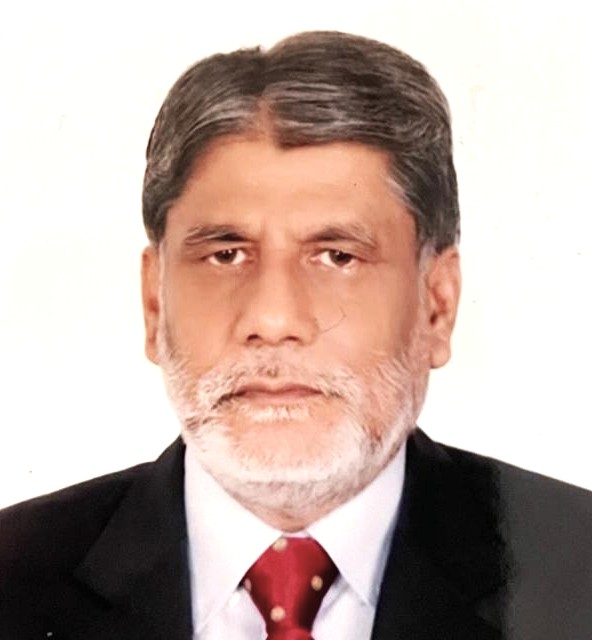
By Prof Dr. Sheikh Akram Ali
The July 2024 Revolution is considered a new chapter that successfully liberated the people of Bangladesh from the fascist regime of Sheikh Hasina and Indian hegemonic control. Undoubtedly, this revolution reflected the aspirations of the people; however, this spirit is yet to be fully integrated as the guiding principle for the future politics of Bangladesh. In light of the July Charter and the referendum, both the government and the opposition parties appear sincere about building a new Bangladesh. The government’s responsibility is to formulate a roadmap or framework for its actual implementation, which can be completed phases by phase; meanwhile, the opposition must continue to exert pressure to ensure its execution.
The current government has no alternative but to adhere to the spirit of the July Revolution. Their success largely depends on implementing the July Charter, alongside fulfilling the promises declared in the February 2026 election manifesto. In 1947, the creation of Pakistan gave birth to a new nation based on the aspirations of the Muslim population of South Asia. However, India began working from the very beginning to destroy that spirit, which was considered the very foundation of this nation. In 1971, Indian diplomacy achieved success through the creation of a secular Bangladesh, and India virtually became its de facto guardian. Although people were happy with their independence, they were simultaneously alarmed and uncertain about their future.
But the August Revolution of 1975 liberated them from this agony and brought new hope for a better future. The changes of August did not take a permanent shape until the rise of Ziaur Rahman through the Sepoy-Janata (Soldier-People) Revolution on November 7, 1975. It was during Ziaur Rahman’s regime that the people of Bangladesh tasted true independence for the first time. Unfortunately, those good days did not last long and came to an end; subsequently, until the July 2024 transformation, the people of this country witnessed one weak government after another. This transformation has truly ignited new hope and aspirations among the people of Bangladesh, inspiring them with the spirit of the July Revolution.
The Bangladeshi nation has not only been liberated from the autocratic rule of Sheikh Hasina but has also gained freedom from India’s hegemonic control. Many consider this as the second and true independence of Bangladesh. Except for a negligible number of Indian agents or collaborators, the entire country is united today, ensuring that the spirit of the July Revolution guides the nation in the future. In the future, they want to see Bangladesh as truly independent and sovereign in all aspects, and they are in no mood to welcome any foreign power’s “Dadagiri” (bossy or big-brotherly behavior). Relations with any country must be on the basis of equal dignity. No one should expect extra privileges in future dealings with Bangladesh.
The people of Bangladesh will not tolerate any politics under the guise of diplomacy. Islam has played a central role in all past transformations, and it may play a similar role in the future politics of Bangladesh. If any political party ignores this very simple truth, they will soon lose public support. There is no denying the fact that Islam acts as the primary catalyst for national unity, and it can also ensure a discrimination-free society. The rule of law and democratic practices in society can ensure peace and prosperity in the future, and these constitute the true spirit of the July Revolution. No one has the capacity to go beyond this. And if any section of the people goes against this spirit, their ultimate downfall or demise from Bangladeshi politics will occur soon.
It is a good sign that the Whip, Ashrauddin Nizam, has given due importance to the spirit of the July Revolution and has declared his stance in its favor. The recent comments of the Information Minister in response to the statements of the new Indian High Commissioner have been highly appreciated, and the Foreign Minister’s reaction regarding the treatment meted out to Dr. Zahid at the Delhi airport has also been highly praised. There are other civil and military leaders who have vowed to resist any kind of hegemonic influence from India in the future. Protesting against India’s hegemonic role, Dr. Mahmudur Rahman and Colonel Abdul Haq have already emerged as champions.
Brigadier General Hasan Nasir, Maj Gen Rokan uddin, Brigadier General Hasin, Brigadier General Ziaul Hasa, Duke Huda, Rashed Pradhan, Major Imran, Major Del H Khan, Khaimoni Ihsan, and Engineer Rezaul Karim are working sincerely day and night through their respective forums to build public opinion in favor of the July spirit. It is also learned that RAOWA (Retired Armed Forces Officers’ Welfare Association) Chairman Colonel Abdul Haq is working sincerely to form a national forum to keep the spirit of July alive in society; on the other hand, there is a possibility that other popular figures like Engineer Rezaul Karim will join hands in this noble initiative.
(The writer is an academic and political commentator in Bangladesh and can be reached at news@metro-morning.com)
