





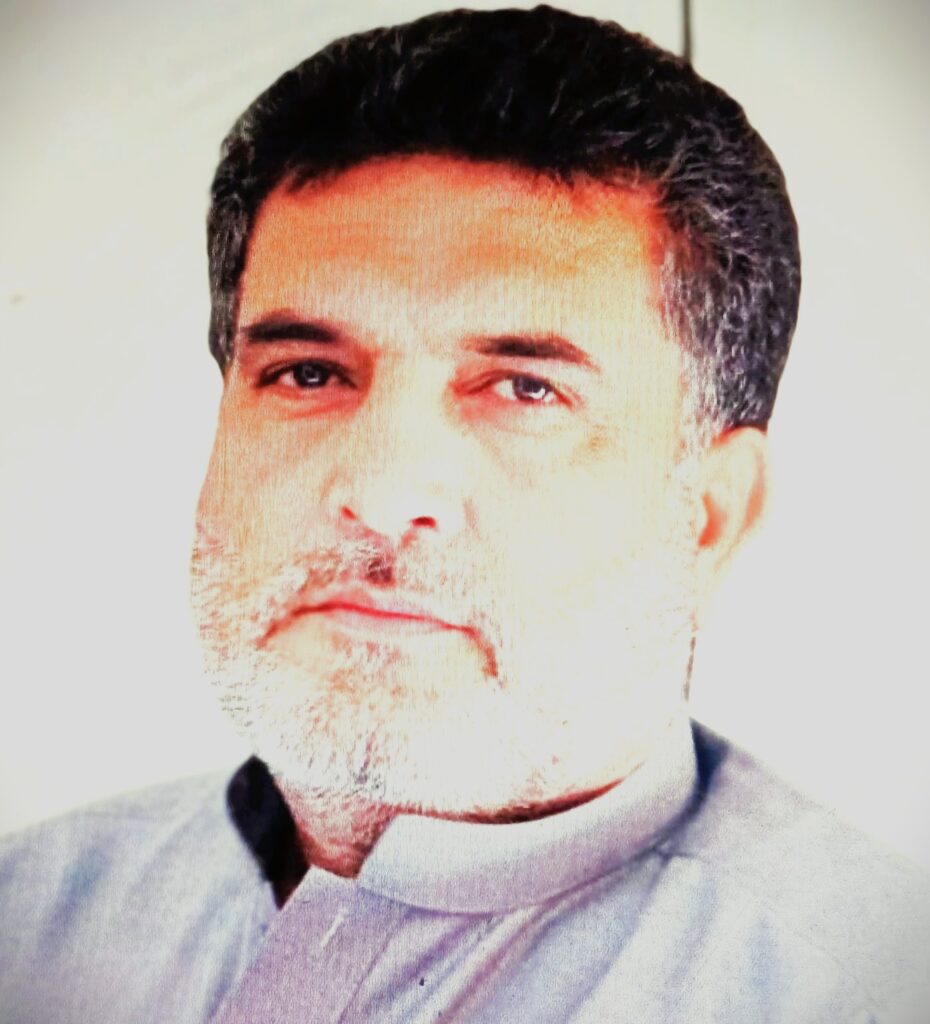
By Khpalwak Mohmand
Pakistan’s tribal districts have paid a heavy price for the country’s security challenges. For decades, their people endured terrorism, military operations, displacement, damaged infrastructure and the loss of livelihoods. They were repeatedly promised peace, development, employment and full integration into the national economy. Yet, after years of sacrifice, many communities are again confronting a familiar problem: economic uncertainty.
Two developments in particular deserve serious attention. Restrictions on the use of explosives have disrupted mining activity, an important source of employment and income in several tribal districts. At the same time, trade through major crossings along the Pakistan-Afghanistan border, including Torkham, Ghulam Khan, Kharlachi, Angoor Adda and Chaman-Spin Boldak, has faced prolonged disruption. Whatever the security or administrative justification for these measures, their economic consequences cannot be ignored.
The state has both the authority and responsibility to protect its borders, regulate trade and take measures required for national security. But security policy cannot be considered in isolation from its economic consequences. When thousands of trucks remain stranded, markets lose customers, mines operate below capacity and workers lose their daily income, the impact extends far beyond traders and mine owners. Drivers, laborers, transporters, shopkeepers, hotel workers and small businesses all become part of the chain of economic losses.
This is particularly serious in areas where employment opportunities are already limited. The economies of the tribal districts have historically depended heavily on border trade, mineral resources and small businesses. These sectors are closely connected. A disruption in one affects the others. If all three are weakened at the same time, families that survive on daily wages have little capacity to absorb the shock.
The central issue, therefore, is not whether the government has the right to impose restrictions. It does. The question is whether the economic consequences were properly assessed before those decisions were implemented, and whether adequate alternatives were prepared for the people affected. Security measures are often introduced in response to immediate threats, but economic hardship can produce longer-term instability. A trader who cannot move goods, a driver who cannot find work or a laborer whose mine has stopped operating cannot simply wait indefinitely for conditions to improve. For families living close to subsistence, even a few weeks without income can create debt, food insecurity and pressure to seek work elsewhere.
The government should therefore make economic impact assessments an integral part of major security and border-management decisions in the tribal districts. Where restrictions are unavoidable, they should be accompanied by practical relief measures. Alternative employment schemes, temporary assistance for affected workers, support for small businesses and streamlined arrangements for legitimate trade could help prevent necessary security policies from becoming permanent economic burdens.
The same principle applies to the mining sector. If restrictions on explosives are necessary because of security concerns, the authorities should work with mining operators to establish safer and legally compliant methods of extraction. The objective should be regulation, not the collapse of an industry on which local communities depend. Mineral resources can contribute substantially to the economic development of the tribal districts if they are exploited transparently, safely and with greater participation by local communities.
Border trade requires similar attention. Pakistan and Afghanistan have legitimate security and regulatory concerns, but border crossings are also economic lifelines for communities on both sides. Prolonged closures or uncertainty hurt formal traders as well as ordinary workers. Better documentation, customs procedures, security screening and predictable operating arrangements could help reconcile border management with commercial activity.
The deeper issue is one of trust. The strength of the state is measured not only by its ability to secure a border but also by its capacity to protect the livelihoods of citizens affected by difficult decisions. The people of the tribal districts have already demonstrated their willingness to bear extraordinary costs for national security. They should not now be expected to carry the economic burden indefinitely without a clear plan for recovery and development. The integration of the former tribal areas into the national mainstream was meant to open a new chapter.
That promise cannot be fulfilled through infrastructure projects or administrative reforms alone. It requires sustainable employment, functioning markets, investment and confidence that the local economy has a future. The government should listen carefully to the concerns emerging from the tribal districts and respond before economic frustration becomes another source of instability. Security and development should not be treated as competing priorities. In these areas, they are inseparable. A secure border is important, but so is a secure livelihood. The real test of state policy will be whether it can protect both.
(The writer is senior journalist at tribal district Mohmand, has in-depth knowledge of national and international issues, can be reached at editorial@metro-morning.com)
