





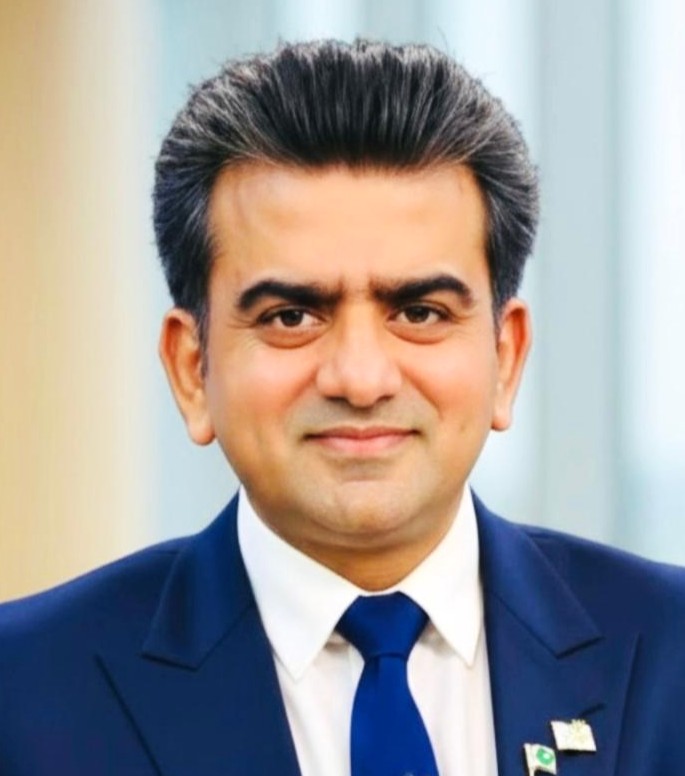
Dr. Hussain Thebo
At a time when global politics remains defined by rising tensions, the recent engagement between Iran and the United States in Islamabad offers a rare moment of cautious optimism. More significantly, it underscores Pakistan’s growing relevance as a credible bridge between nations marked by deep and enduring differences. The leadership in Islamabad deserves recognition for facilitating this development. Prime Minister Shehbaz Sharif’s clear endorsement of dialogue and peaceful engagement set the tone, while Field Marshal Hafiz Syed Asim Munir’s role proved instrumental in ensuring both stability and strategic support.
Complementing these efforts, the national security apparatus worked in close coordination to create conditions conducive to meaningful exchange. A striking feature of the dialogue was the scale and seriousness of Iran’s participation. The presence of a 71-member delegation signaled more than symbolic intent. It pointed to thorough preparation, internal consensus, and a willingness to pursue tangible outcomes. Iran’s posture throughout appeared measured and constructive. On the American side, there were also indications of genuine engagement. Vice President JD Vance demonstrated a degree of openness and commitment to advancing the dialogue.
At the same time, it was evident that divergences persist within US policymaking circles. In my opinion, figures such as Steve Witkoff and Jared Kushner were less inclined towards a ceasefire framework, favoring positions more closely aligned with Israel. Such internal differences reflect the complexities shaping American decision-making. Despite these constraints, the significance of the Islamabad talks should not be overlooked. The mere willingness of both sides to engage directly marks an important step forward. Conflicts of this magnitude are rarely resolved swiftly; however, sustained dialogue helps create space for understanding and reduces the risk of further escalation.
Pakistan’s role in this process is particularly noteworthy. By maintaining working relationships with both Tehran and Washington, it occupies a unique position as a facilitator. Its geographic setting, coupled with an evolving diplomatic posture, enables it to host conversations that might not be feasible elsewhere. This points to a gradual but important shift in Pakistan’s foreign policy towards constructive engagement and regional stability. It is equally important to recognize that mediation is not about imposing outcomes but about enabling communication. Pakistan appears to have adhered to this principle, offering a neutral platform rather than seeking to shape the results directly.
Looking ahead, continuity will be essential. A single round of talks cannot resolve deeply entrenched disputes. Meaningful progress will depend on sustained engagement, confidence-building, and a genuine willingness on both sides to move forward. Pakistan has already signaled its intent to continue facilitating this process, a commitment that carries weight. In a region often characterized by volatility, even incremental diplomatic efforts can yield meaningful dividends.
While the Islamabad talks may not have produced immediate breakthroughs, they have opened an important channel. If future engagements build on this foundation, there remains hope for more substantive outcomes. Ultimately, peace and stability in the region will hinge on consistent dialogue and mutual understanding. Pakistan’s role as a mediator is both timely and necessary, and its continued efforts could contribute to gradual yet meaningful progress.
(The writer is a journalist, columnist, strategic affairs analyst, public diplomacy and PR specialist. He can be reached at editorial@metro-morning.com)
