





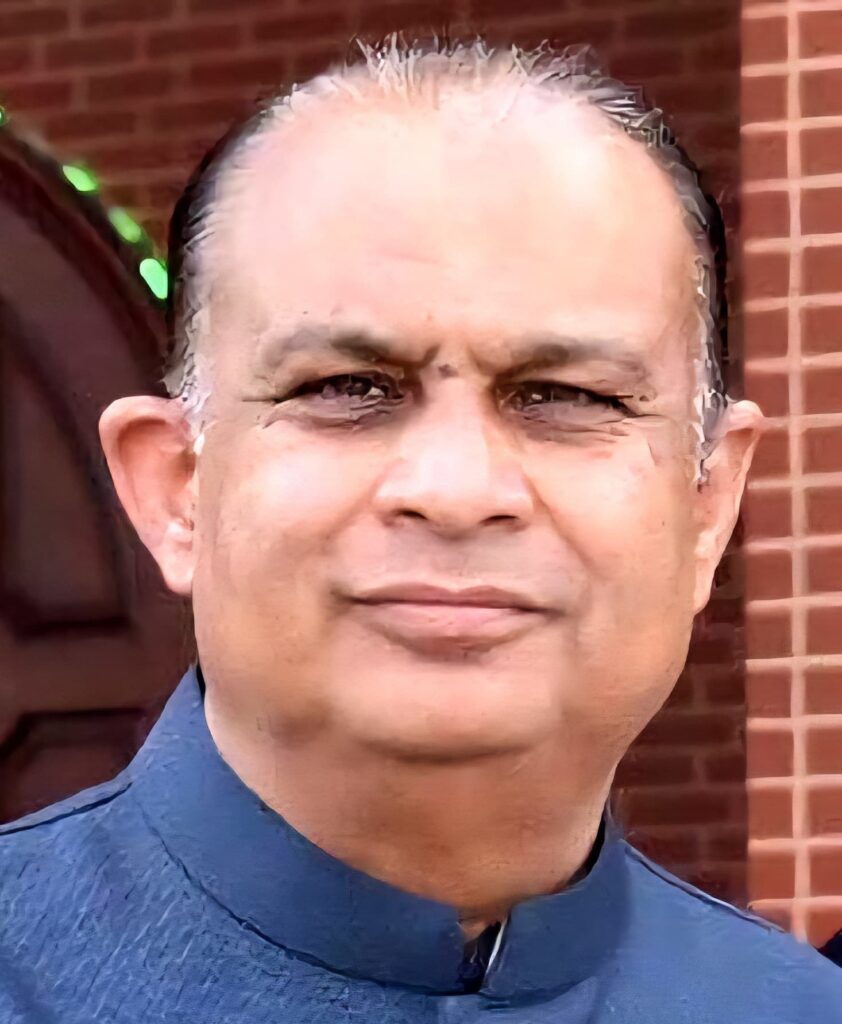
By A Rehman Patel
The doctor stood in his white coat. Modern machines were neatly arranged on the table, and the rows of letters on the wall stood like a silent examination before me. After completing the checkup, he smiled and said, “Haris, it’s remarkable… even at this age, your vision is perfectly 6/6.” I thanked him, yet a faint smile arose within my heart, because the person he had declared perfectly sighted was actually living in a world where everything is visible — and yet nothing is truly seen. He does not see old Kareem in his neighborhood, sitting at the door for days waiting for groceries. He does not see Shazia, the house helper, who has not yet been able to buy the basic necessities for Ramazan. He does not see the orphan girl whose wedding is after Eid, in a home quietly burdened with worry.
What a strange contradiction. The eyes are intact, observation is complete, yet awareness remains silent. Science tells us that the eye merely receives light. The brain interprets that light. But it is the heart that transforms that interpretation into humanity. When the eyes of the heart close, sight remains only a biological function. It no longer becomes moral awareness. The issue here is not eyesight — it is perspective. Glasses can correct weak vision, but no lens has yet been invented to correct indifference. Some people say, “We see everything clearly.” Yet this sentence often does not describe reality. It quietly reveals the silence of conscience.
With the arrival of Ramazan, this question becomes even deeper. Markets become brighter. Tables become fuller. The atmosphere of worship intensifies. Yet within the same light there are homes where the lamps remain dim, where preparations for suhoor come with worry, and iftar comes with prayer. Human psychology is peculiar. People often choose to see only what does not disturb their comfort. Pain, deprivation, and poverty are pushed quietly into the background of the mind. And slowly a kind of social blindness emerges — a blindness not of the eyes, but of habit. Perhaps that is why the real examination should not be of eyesight, but of insight. One wishes a doctor would also ask, “How clearly can you see the people around you?”
Ramazan is, in reality, the season meant to awaken this hidden vision. Hunger is given so that we may recognize the hunger of others. Worship is given so that we may look within ourselves. In addition, here another important dimension appears — charity, zakat, and acts of giving. Many of us begin calculating in this month. We check the threshold, calculate percentages, and count the amount. This is necessary, because accountability has its place in faith. Nevertheless, the deeper question remains: do we only calculate the amount, or do we also measure the need? Life carries a profound principle: what is given by measure often returns by measure.
The true vision of Ramazan is that a person does not merely see numbers, but sees circumstances. Not just lists, but faces. Not merely fulfilling an obligation, but fulfilling compassion. Look carefully around you. An empty dining table in someone’s home. Someone unable to afford medicine. A small wish of an orphan. The silent hardship of a laborer. These are the places where the eyes of the heart begin to open. So make your calculations, certainly. But expand those calculations. Double them. Triple them. On the other hand, let the heart add something more. Because when a person gives beyond his capacity, the return does not come through calculation — it comes through generosity.
Charity is not merely a financial act. It is an act that keeps our inner vision alive. The tragedy is not that some eyes cannot read the letters on a chart. The real tragedy is when insight cannot read the pain of human beings. So this Ramazan, do not see only with your eyes. See with your heart. Understand with your mind. In addition, give with open hands. Because when a person gives beyond his own measure, the One who gives above does not reward according to calculation — He rewards according to His grace.
(The Pakistani-origin American writer and columnist, sheds light on various social and political issues, can be reached at editorial@metro-morning.com)
#Ramazan #Charity #Zakat #Compassion #Humanity #Giving #RamadanReflection #SocialResponsibility
