





News Desk
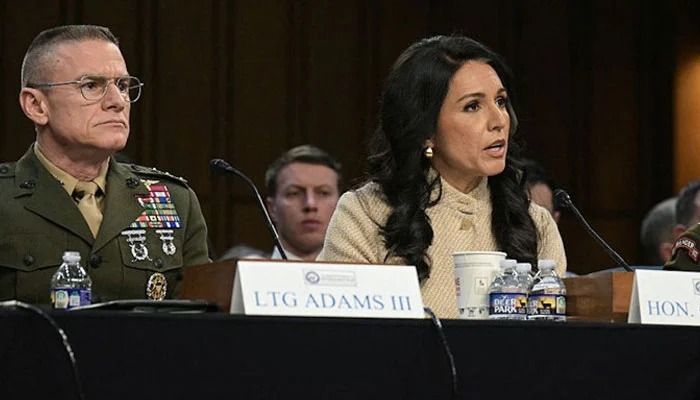
WASHINGTON: The US Director of National Intelligence released the 2026 annual threat report on Wednesday, drawing attention to Pakistan, India, and Afghanistan amid rising regional security concerns. The report warned that historical tensions between Pakistan and India continued to pose a potential risk of nuclear confrontation, even as both countries reportedly sought to avoid full-scale conflict.
Officials said terrorist activity in the region remained a significant factor in escalating tensions. Groups such as ISIS-Khorasan were highlighted as seeking to develop capabilities for attacks beyond Afghanistan, potentially threatening neighboring countries and international interests. Analysts warned that such activities could spark larger conflicts if left unchecked.
The report also noted rapid advances in Pakistan’s missile technology. Experts cautioned that if the trend persisted, Islamabad’s capabilities could eventually reach locations beyond South Asia, including American territory. While stressing that Pakistan’s missile program remained primarily defensive, the assessment indicated the growing strategic importance of the country in regional security calculations.
Relations between Pakistan and the Taliban were described as tense, with cross-border clashes and terrorism reported to be on the rise. Islamabad has reportedly intensified operations against militant groups operating inside Afghanistan. The report urged the Taliban to sever ties with anti-Pakistan networks to enable sustainable peace in the region.
Officials stressed that preventing escalation required both strong counterterrorism efforts and sustained dialogue between regional powers. The report concluded that coordinated international action, alongside credible national security measures, remained essential to maintaining stability in South Asia.
#USIntel #Pakistan #India #Afghanistan #NuclearRisk #SouthAsia #ISISK #MissileProgram #RegionalSecurity #ThreatAssessment #MetroMorning #PakistanNews #BreakingNews #WorldNews #LatestNews
