





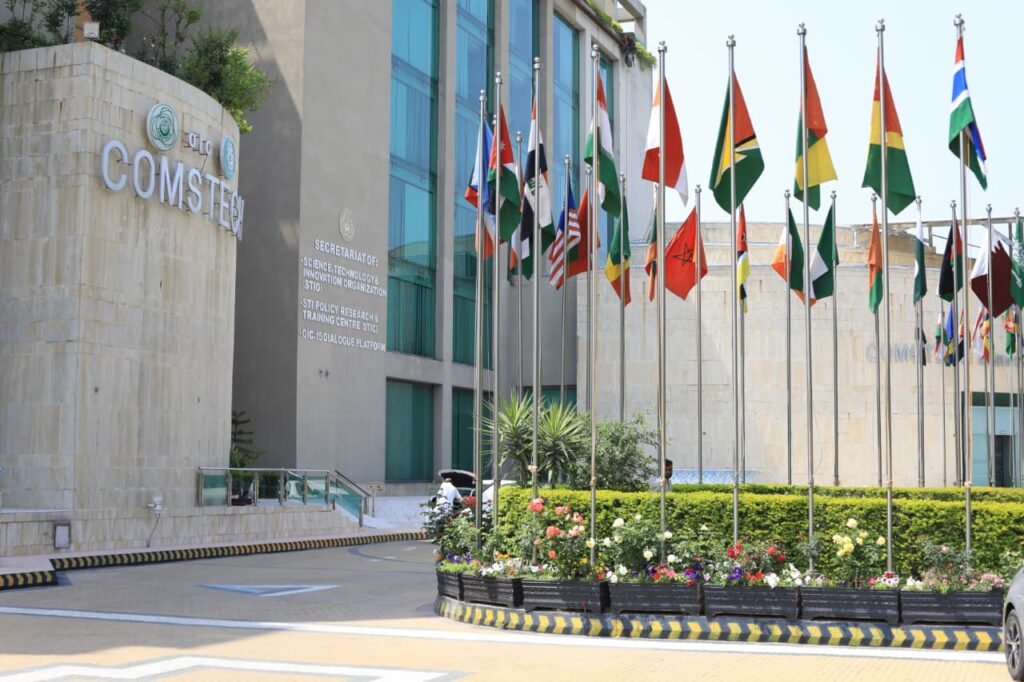
By Pervaiz Mughal
ISLAMABAD: The Organisation of Islamic Cooperation’s Ministerial Standing Committee on Scientific and Technological Cooperation (COMSTECH) trained around 5,000 scientists and researchers from 54 countries and awarded 759 scholarships and fellowships during 2025, reflecting a significant expansion of its scientific, educational and research outreach across the Muslim world, according to its annual report.
The Islamabad-based organisation said it implemented 174 projects and initiatives over the course of the year, while awarding 52 research grants and organising 68 specialised training programmes. It also broadened its academic partnerships by expanding its network to more than 80 universities, research centres and higher education institutions across OIC member states.
The annual report highlighted COMSTECH’s growing role in promoting scientific cooperation, higher education and research collaboration among developing countries through capacity-building programmes and institutional partnerships.
According to the report, beneficiaries included scientists, researchers, students and academic institutions from a diverse range of countries, including Algeria, Azerbaijan, Bangladesh, China, Indonesia, Iran, Morocco, Rwanda, Saudi Arabia, Türkiye, Palestine and Yemen, as well as several African nations.
The organisation said the 759 scholarships and fellowships formed a cornerstone of its human resource development strategy. The programmes enabled students and early-career researchers to pursue higher education, advanced research and specialised scientific training at universities and partner institutions in Pakistan and other participating countries.
COMSTECH also reported that approximately 5,000 scientists and researchers received professional training through 68 programmes focused on advanced scientific equipment, biotechnology, vaccine technology, health sciences, information technology and other emerging disciplines. The training aimed to strengthen technical expertise and improve research capacity in member states facing shortages of specialised scientific infrastructure.
The report further revealed that 52 research grants were awarded during the year, with particular emphasis on supporting young researchers and women scientists working in biotechnology, scientific innovation and international collaborative research. It said the grants were specifically designed to assist researchers in developing countries, where financial constraints often limit scientific advancement and access to modern research facilities.
